Meet Joan
A TBI Support Success Story
Joan Kite, a two time Traumatic Brain Injury (TBI) survivor shared her story with DRT’s Lee Sherwood and discussed her recovery journey and what it means to be an advocate.

Joan Kite, a two time Traumatic Brain Injury (TBI) survivor shared her story with DRT’s Lee Sherwood and discussed her recovery journey and what it means to be an advocate.
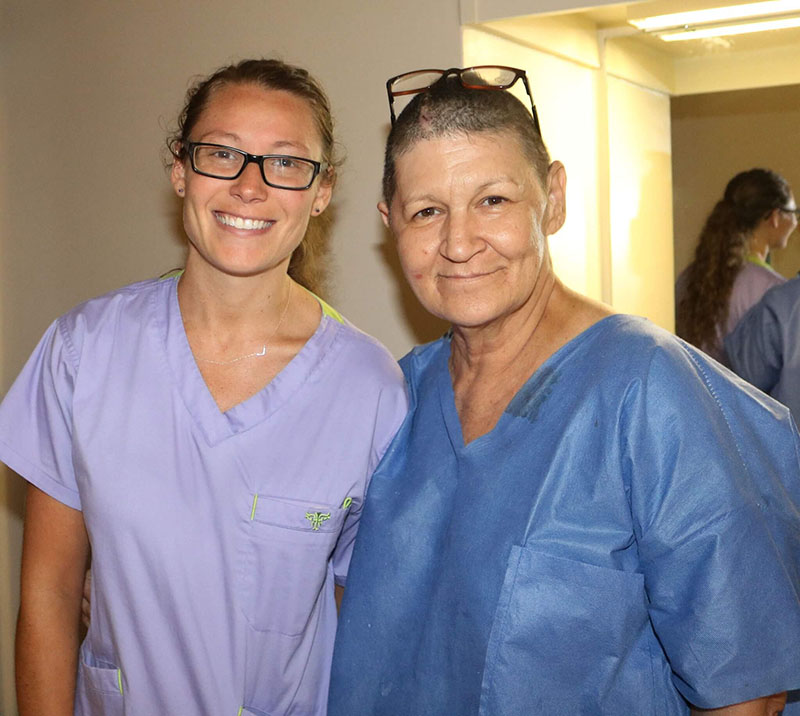
Last year, I had the pleasure of being introduced to Joan Kite. Joan is a survivor of not just one, but two, traumatic brain injuries and has been a dedicated participant of Disability Rights Tennessee’s (DRT’s) monthly Traumatic Brain Injury (TBI) support groups and art therapy classes.
There are many important days and months throughout the year that celebrate the history, pride, and ongoing barriers for people with disabilities. While Joan’s story does not require a specific month or anniversary to share her amazing story, we do want to highlight that today, January 23, is the anniversary of the Protection & Advocacy for Individuals with Traumatic Brain Injury (PATBI) program.
Joan emphasized the consistency of advocacy when we talked. She explained that when you have a disability yourself, it is not just those designated days or months that advocacy is front and center, it is every day.
Through her involvement with DRT’s TBI support groups and general TBI program, Joan has found a supportive community that she emphasizes brought her out of feeling like she was “wandering in the wilderness alone.”
A traumatic brain injury is defined as “a disruption in the normal function of the brain that can be caused by a bump, blow, or jolt to the head, or penetrating head injury.”
In 2020 alone, 21,399 Tennesseans had a TBI-related Emergency Department (ED) visit, hospitalization, or death.
You can read more about the TBI registry, demographic information, and other TBI-related information in the 2022 TBI Annual Report.
During the summer of 2019, Joan suffered her first TBI. While coming home one evening, Joan was attacked, and her skull was fractured. Joan mystified doctors as she “leapt” off the table following her craniotomy to relieve pressure and stop the bleeding in her skull.
Following her full recovery from this injury, Joan did not associate herself with the TBI survivor label, admitting she didn’t fully understand what sustaining a TBI really meant for other survivors.
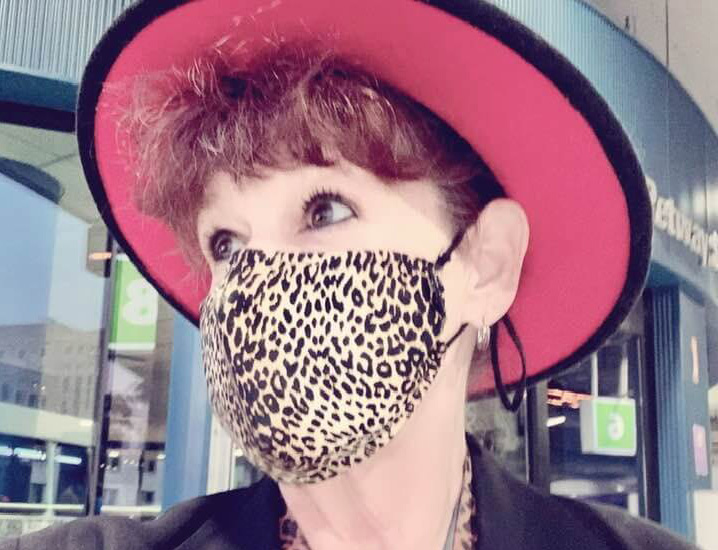
But it was just a mere 6 months later that Joan was crossing Gallatin Pike in East Nashville to visit her local Kroger that she was hit by a car and suffered her second TBI, this time a far more severe diagnosis. Joan was in a coma for 4 months during which, a lawyer was assigned to manage her estate based on her terminal diagnosis by doctors.
Much to Joan’s dismay, once she defied her doctor’s diagnosis and woke up from her extended coma, all her belongings had been sold and she was not just awakening to adjust to her new disability but was homeless.
It wasn’t until March 2020 that Joan regained the level of consciousness necessary to begin rehabilitative care, including re-learning basic motor functions like eating and walking. Simultaneously, the COVID-19 pandemic was shutting down the world. But, in contrast to global uncertainty, Joan was able to stay employed in her position, putting together the Bulletin (an information newsletter), at Tennessee State University (TSU) due to suspended operations.
Upon Joan’s release from Vanderbilt University, a string of hardships followed. With all of her belongings being redistributed by her attorney when unconscious, Joan was forced to bounce between group homes for 6-8 months (which lacked the resources needed for someone recovering from a recent TBI).
Following a 9-day stint in a homeless shelter, Joan finally moved into an apartment of her own on Christmas Eve in 2020 and adopted a cat to start this new chapter in her life. An apartment that she still calls home to this day.

The 18-months the followed Joan’s second accident in late-2019 led her to the realization that existing mental health disorders can intensify (and even multiply) after a traumatic event. It was at this point that Joan was faced with the fact that she needed more stability, starting with a new job.
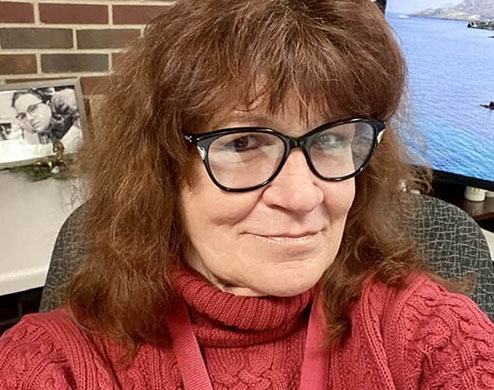
In November 2022, Joan accepted and started a position at MeHarry Medical College where she serves as the Research Communications Editor within the Office for Research and Innovation, promoting medical research and developing a digital newsletter.
Joan identifies as having both a visible and invisible disability due to her two TBIs. “I might look okay on the outside, but like every TBI survivor, I have my own issues.” For many people with disabilities, colloquialisms, or throwaway phrases, used by able-bodied people trivialize some of the struggles associated with a disability.
For Joan, her short-term memory was impacted by her second TBI, but sees it being trivialized in her day-to-day life when others try to sympathize with her condition by agreeing that they too “forget things all the time.”
It is important for the community to understand that the impact of someone’s disability, visible or invisible, and any symptoms or behaviors are not an adjective or “quirk” through which to relate.
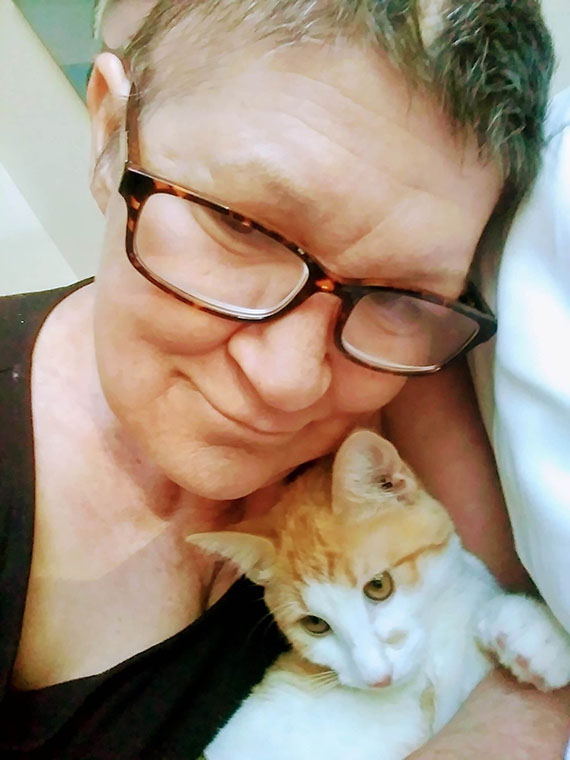
For Joan, advocacy means looking beyond immediate personal needs and instead being a part of systemic change to better the future for the benefit of your whole community.
Joan still grapples with unanswered questions about what her TBI diagnosis means for her future and any unknown impacts it may have as she ages.
Yet, she is firm in her advocacy for fellow Tennesseans with a current TBI diagnosis and ensuring that anyone diagnosed in the future has more resources to rely on than she did.
For Joan, advocacy means looking beyond immediate personal needs and instead being a part of systemic change to better the future for the benefit of your whole community.
DRT has resources for TBI survivors, family members, and community members, including bi-monthly support groups. You can review all of them in the “Resources” section of our website
Explore Our ResourcesKevin’s daycare said he couldn’t come back after he got a feeding tube.
Kevin’s parents were shocked, and stuck. Without care options, one of them would need to stop working. That’s when Kevin’s parents reached out to Disability Rights Tennessee (DRT).
DRT helped the daycare understand the law and what Kevin needed to be reunited with his friends. Now Kevin is back with his friends and his parents can return to work, knowing that he is safe.

Kevin* is like most toddlers, full of energy and loves playing with his friends at daycare.
When his appetite started to drop, his parents took him to the doctor. Kevin was diagnosed with low blood sugar and his doctors recommended that he get a G-tube—a small feeding tube that would help keep his blood sugar stable and make sure he got enough nutrition.
Kevin’s parents knew that this change would take some adjustment for everyone involved, but they felt confident that his daycare could provide the support he needed when they were given the proper information and training. However, when Kevin’s parents went to the daycare about Kevin’s new G-tube, the staff said Kevin couldn’t return.
—Kevin’s Mom
Kevin quickly started to miss his friends and his normal routine. One of his parents had to alternate taking leave from work to care for him. Family and friends stepped up and tried to help where they could, but the loss of childcare caused serious stress and wasn’t a long-term solution.
That is when Kevin’s family reached out to Disability Rights Tennessee (DRT). DRT stepped in to explain to Kevin’s parents and the daycare that under the Americans with Disabilities Act (ADA), daycares must make reasonable changes to include children with disabilities in their programming.
Unless these changes would cause an “undue burden” or major hardship on the daycare or “fundamentally alter” or change the nature of their program or care. Tennessee law also says daycares should make reasonable efforts to include children with disabilities.
DRT worked with the daycare to explain the laws, answer their questions, and help them understand how to safely support Kevin and any other children in the future with medical needs or disabilities. Once the staff learned more and gained the skills they needed to feel prepared, Kevin was welcomed back with open arms.
DRT’s goal wasn’t to get the daycare in “trouble.” Our goal was to make sure that the daycare had the tools and information they needed to do the right thing and follow the law. When community places like daycares are given an opportunity to learn and ask questions, future situations like Kevin’s can be avoided.
Now, Kevin is back at daycare and spends his days laughing and playing with his friends. His parents have both returned to work and are able to continue to provide for Kevin and pursue their dreams while they know Kevin and other children at the daycare are supported and cared for.
*Kevin is a pseudonym
DRT has resources for TBI survivors, family members, and community members, including bi-monthly support groups. You can review all of them in the “Resources” section of our website
Explore Our ResourcesJames needed heart surgery, but no one would tell him what was going on.
When James was admitted to a Tennessee hospital for lifesaving surgery, he asked for a sign language interpreter so he could talk with his doctors.
James is deaf and uses American Sign Language (ASL), but no interpreter ever came. For five days, James was in in pain and had questions about his care plan, but he couldn’t ask questions or tell his medical team how he felt. Effective communication is critical in healthcare. Everyone deserves to understand their care plan and be understood in return. Disability Rights Tennessee (DRT) helped James advocate. And in turn, helped make sure no one goes through this in the future.
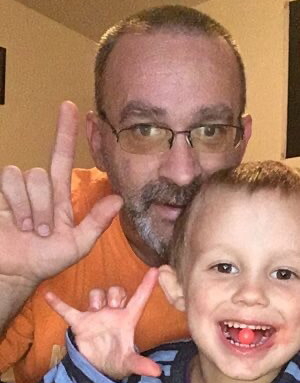
James is a loving single dad who moved to Knoxville, Tennessee to be closer to his young son. James is also deaf and uses American Sign Language (ASL) to communicate.
ASL is its own language with unique grammar and vocabulary, it is not the same as written or spoken English.
In 2017, James needed lifesaving heart surgery. When he arrived at the hospital, he told the staff that he needed a sign language interpreter so that he could communicate with his doctors and care team. But the hospital never provided one.
For five days, James stayed in the hospital with no way to ask questions, express concerns, or receive information from his doctors about his pain, symptoms, medical history, and what to expect in upcoming procedures. “I felt completely shut out,” James told the DRT advocacy team.
Under the law, hospitals must provide patients who are deaf or hard of hearing with the same clear communication that hearing patients receive. This includes providing qualified interpreters or other means to communicate effectively when needed.
Disability Rights Tennessee (DRT) helped James to try and solve the issue, but when the situation wasn’t remedied, DRT helped James take legal action. “A hospital can’t treat someone differently just because they are deaf,” says DRT’s Legal Director Stacie Price. “No one should have to go through major surgery without understanding what’s happening.”
James was able to make sure that no one else had to go through what he did by sharing his experience and becoming a self-advocate. With DRT’s help, he is advocating to make hospitals more accessible for everyone.
DRT has resources for TBI survivors, family members, and community members, including bi-monthly support groups. You can review all of them in the “Resources” section of our website
Explore Our ResourcesDoriscell was doing her job, but her hearing aids weren’t.
Doriscell worked hard each day at her job to help customers in-person and over the phone. But when her hearing aids stopped working, she was unable to do her job.
Without her hearing aids, Doriscell wouldn’t hear well enough to communicate with customers, and without her job she wasn’t able to afford new hearing aids. When she kept being told “no,” Doriscell didn’t give up, she reached out to Disability Rights Tennessee (DRT).
With DRT’s help, she found her voice, got the tools she needed, and made sure that others in the future wouldn’t face the same barriers she did.

Doriscell has been a hard worker her entire life. At her job, she answered customer questions both in-person and over the phone. She relied on the assistance of hearing aids to do her job well… until one of them broke.
Doriscell is hard of hearing and has worn hearing aids for over 27 years. When one broke she knew she needed new ones to keep working, so she turned to Vocational Rehabilitation (VR). VR was a program that Doriscell had worked with before, but this time she was told they couldn’t help with her current problem. The reasoning was that she made too much money for VR to assist in getting her new hearing aids, but she was faced with a bigger issue: Her current income wasn’t enough to afford new hearing aids.
–Doriscell
While Doriscell looked for help to get new hearing aids, some customers were understanding of Doriscell’s disability, others were not. Many did not understand what it meant to be hard of hearing, and some would ask to speak with someone else instead. She tried to stay patient with customers. “If you haven’t experienced it yourself, you don’t know what it’s like,” she said. “But patience is key.”
During an appointment with her audiologist, Doriscell was referred to Disability Rights Tennessee for help. Becky Allen, a former Director of Assistive Technology at DRT, quickly stepped in. Becky set up a meeting with VR and made a request for an exemption to their policy. She asked Vocational Rehabilitation to take a look at Doriscell’s real income, not her old tax return for her Financial Needs Assessment. That made the difference.
After Becky set up a meeting between Doriscell and VR, Doriscell received approval for new hearing aids and updated her Individualized Plan for Employment (IPE). After almost two years of waiting, Doriscell could finally hear her customers clearly again. “They work very well,” she said of the new hearing aids. She also visits her audiologist regularly to keep them in good shape.
This situation at her job taught Doriscell that it is important to speak up. “You need a doctor to know what’s going on. That’s basically what you need, an advocate. The doctor needs to be your advocate, too.” And when that isn’t enough? “Be a self-advocate,” she said. “Keep asking questions. Keep searching for answers.”
DRT has resources for TBI survivors, family members, and community members, including bi-monthly support groups. You can review all of them in the “Resources” section of our website
Explore Our Resources